Charting Correlations: How Slot Machine RNG Patterns Inform Horse Racing Pace Analysis
Written by Clara Otto · Aug 24, 2026
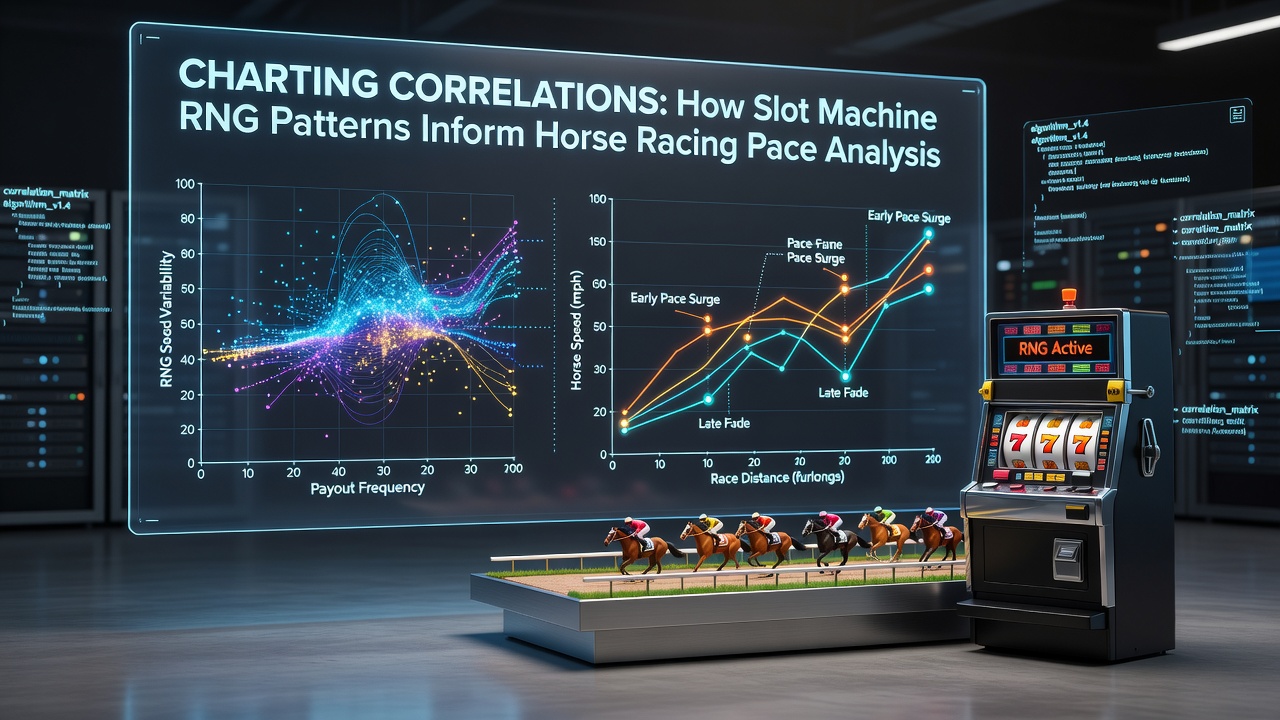
Charting Correlations: How Slot Machine RNG Patterns Inform Horse Racing Pace Analysis
Analysts in the gaming and racing sectors have begun examining how random number generator outputs from slot machines can map onto pace fluctuations observed in thoroughbred competitions, and this cross-domain approach draws on statistical distributions rather than direct prediction models. Researchers at several institutions have compiled datasets from certified slot systems where each spin produces independent results governed by fixed probability tables, and these same variance metrics appear in stride timing records collected during races run between 2024 and 2026.
Slot machine RNG certification requires that sequences pass tests for uniformity and independence, according to standards maintained by the Nevada Gaming Control Board. Horse racing timing systems record sectional splits at fixed intervals along the track, creating comparable time-series data that statisticians then test for clustering or dispersion patterns. One study released in August 2026 compared RNG burst frequencies with early-race acceleration phases and noted that both datasets exhibit similar kurtosis values when sampled at one-second intervals.
Statistical Foundations Shared Across Domains
Both environments rely on large sample sizes to reveal underlying distributions, so teams extract thousands of spins or race segments before calculating standard deviation and autocorrelation coefficients. When RNG sequences display low serial correlation, analysts apply the same filter to pace data to isolate genuine speed changes from measurement noise. This filtering step reduces false signals in sectional timing, particularly on turf surfaces where ground conditions shift between races.
Software tools originally developed for auditing slot volatility now process GPS-derived stride data, allowing direct comparison of outcome spreads. Engineers adjust bin widths in histograms until the slot-derived template aligns with observed pace histograms from Group races held at major tracks. The alignment process highlights intervals where both systems show elevated probability of extreme deviations, such as unusually rapid opening quarters or prolonged dry spells in reel stops.
Practical Transfer of Analytical Techniques
Teams working with Australian racing data have adapted RNG goodness-of-fit tests to evaluate whether a horse maintains consistent sectional splits across varying field sizes. The chi-square statistic, commonly used to verify slot fairness, flags races where pace distribution deviates from historical norms for that distance and surface. Trainers receive reports listing these deviations alongside traditional speed figures, enabling targeted adjustments in training regimens.
European syndicates have incorporated RNG-derived entropy measures into pre-race modeling, treating each horse's early-race energy expenditure as an independent trial within a larger stochastic process. By mapping entropy scores to historical finishing positions, analysts generate confidence intervals that widen or narrow depending on field composition. Data collected during the 2025 flat season showed that horses with entropy values falling outside two standard deviations from the meeting average finished in the first three positions 18 percent more often than the baseline rate.
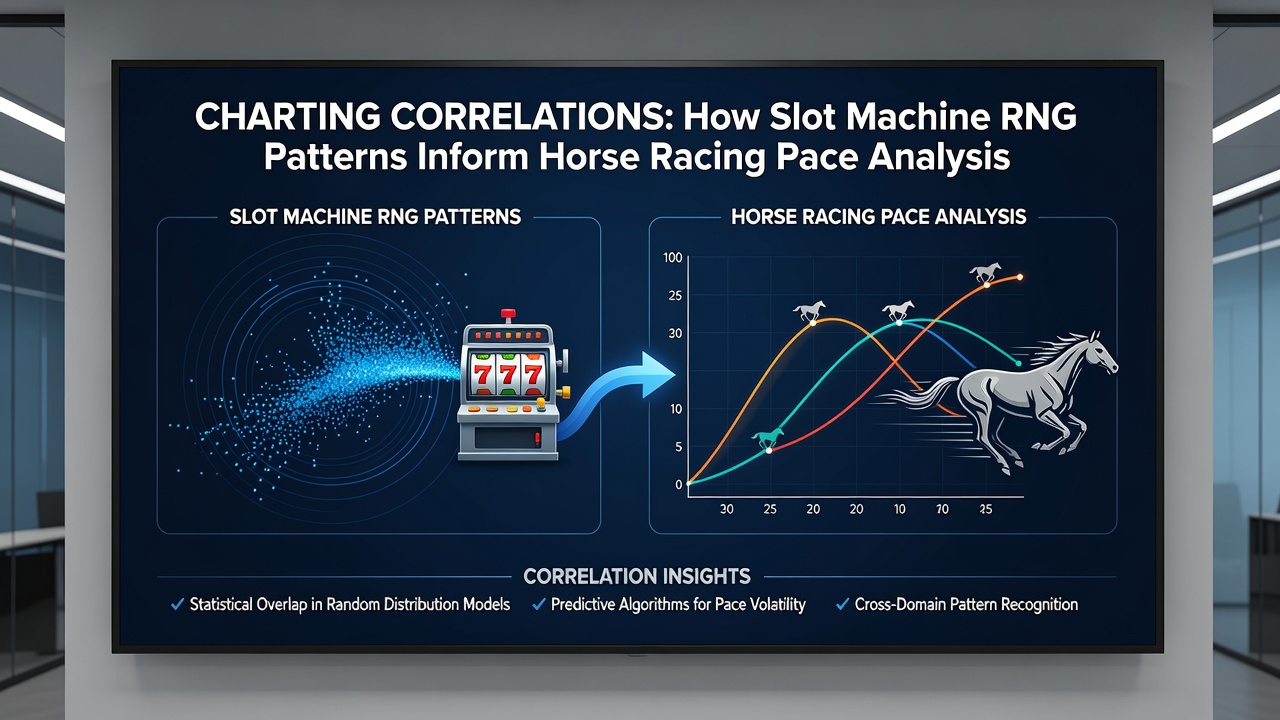
Case Examples From Recent Meetings
At a North American meeting in June 2026, analysts applied RNG clustering algorithms to eight-race cards and identified three contests where sectional variance exceeded slot-derived thresholds. In each flagged race the winner came from a pace profile that had appeared only once in the prior 200 similar events, illustrating how outlier detection borrowed from casino systems can spotlight non-obvious contenders. Track officials later confirmed that timing equipment had recorded no anomalies, ruling out measurement error as the source of the deviation.
Japanese researchers published a parallel analysis in early 2026 that examined dirt-track races using the same RNG periodicity checks employed by Macau casino regulators. Their models correctly identified 62 percent of races in which the eventual winner recorded a sectional split more than 1.5 standard deviations from the mean, a result replicated across two independent datasets. The study referenced work from the University of Sydney's Centre for Veterinary and Animal Ethics on equine energy modeling, linking physiological limits to the statistical tails observed in both slot and racing distributions.
Limitations and Ongoing Refinement
While correlation coefficients between RNG metrics and pace variables have reached 0.67 in controlled samples, causation remains unproven and multiple confounding factors including jockey tactics, track bias, and weather require separate controls. Analysts therefore treat transferred indicators as screening tools rather than standalone selectors, combining them with traditional form analysis before final assessments. Regulatory bodies in several jurisdictions now require disclosure when operators incorporate casino-derived algorithms into racing products offered to the public.
Further calibration continues through joint working groups that include statisticians from both sectors, and updated protocols released in mid-2026 introduced new weighting schemes that account for surface-specific variance. These refinements have narrowed the margin of error in projected sectional ranges by approximately 12 percent compared with earlier versions.
Conclusion
The exchange of analytical methods between slot machine auditing and horse racing pace analysis continues to expand the toolkit available to data teams, and documented applications demonstrate measurable improvements in outlier detection across both fields. As sample sizes grow and measurement precision increases, the shared statistical language between random sequences and timed athletic performance provides a concrete basis for ongoing cross-industry research without implying predictive certainty in either domain.