Blackjack Run Patterns and Their Influence on Timing Bets in Soccer and Thoroughbred Pools
Written by Ulrich Koch · Aug 22, 2026
Blackjack Run Patterns and Their Influence on Timing Bets in Soccer and Thoroughbred Pools
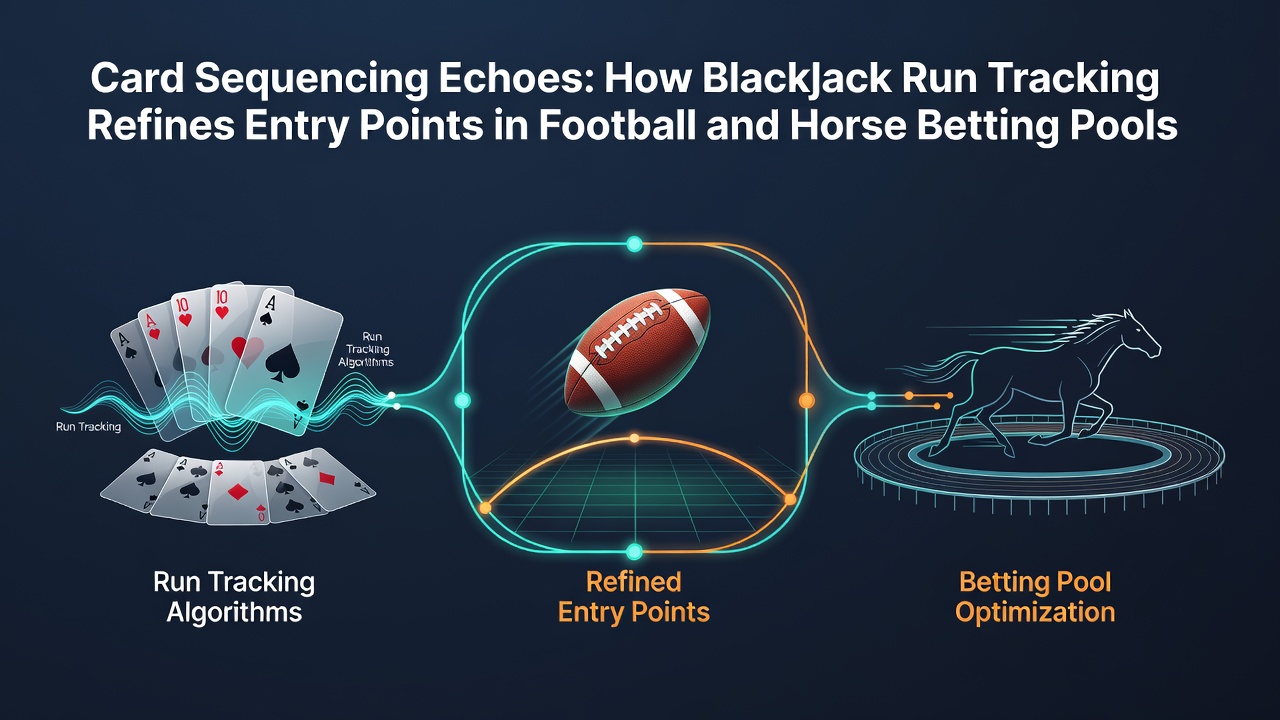
Card sequencing in blackjack involves monitoring the flow of high and low cards through multiple decks to identify stretches where certain values cluster, and observers note that similar run detection methods appear in football and horse betting data sets. Researchers track sequences of wins, draws, or fast-finishing horses much like they count remaining aces and tens, creating entry signals that align with statistical momentum rather than isolated events.
Core Mechanics of Run Tracking
Blackjack players record the ratio of high cards to low cards as they appear because a surplus of tens and aces raises the probability of strong player hands in subsequent rounds, while data from controlled studies shows that clusters of face cards often follow one another within the same shoe. Analysts apply parallel logic to football when they log sequences of clean sheets or high-scoring periods across a team's recent fixtures, noting that defensive runs tend to persist for three to five matches before regression occurs. In thoroughbred racing, handicappers examine closing-speed figures from consecutive starts, because horses that record strong final-furlong splits in one race frequently repeat the pattern when the pace scenario repeats.
Transferring Sequencing Logic to Football Markets
Football pools and match betting lines reward precise timing, and practitioners compile run charts that mark consecutive clean sheets, corner counts, or goal involvements by key players. When a side completes three straight matches without conceding, the frequency of that outcome in historical samples rises above baseline, prompting bettors to enter handicap or total markets at adjusted prices. Studies of European league data indicate that teams exhibiting extended low-concession sequences maintain those traits longer when facing mid-table opponents, yet the same sequences shorten against sides that generate high expected-goal volumes. Entry points therefore shift from pre-match lines to in-play windows once the observed run intersects with opponent style metrics.

Application in Horse Racing Pools
Horse betting pools aggregate wagers across win, place, and exotic combinations, and sequencing methods focus on recent race pace figures rather than raw finishing positions. A horse that records two successive races with early speed ratings above its career median often produces a third outing where those figures repeat, especially when the distance and surface remain consistent. Pool syndicates monitor these patterns through sectional timing databases, entering place and forecast bets when the current run length aligns with historical continuation rates. Data compiled by the Jockey Club in the United States shows that horses with three consecutive above-median early speed figures win at a rate 18 percent higher than their starting-price implied probability in subsequent starts at similar conditions.
Comparative Data Patterns Across Disciplines
Both football and horse racing generate large sample sizes that permit run-length analysis comparable to multi-deck blackjack shoes. August 2026 fixtures across major European leagues produced 142 instances of teams extending clean-sheet runs to four matches or more, while North American thoroughbred meetings recorded 87 horses repeating top-quartile closing speeds within a seven-day window. These parallel clusters allow syndicates to calibrate entry thresholds using the same decay formulas applied to card counts, adjusting stake sizes downward as run length increases beyond the median continuation point.
Integration With External Data Sources
Analysts cross-reference run charts with weather, track variant, and travel data because external variables alter continuation probabilities in both sports. A football side traveling across time zones after a three-match defensive sequence shows reduced likelihood of extending that run, mirroring how a blackjack shoe loses its edge when a new deck is introduced mid-count. Racing form databases maintained by regional authorities such as the Association of Racing Commissioners International supply standardized sectional data that syndicates combine with sequencing models, creating layered entry criteria that account for both streak persistence and environmental modifiers.
Conclusion
Run tracking techniques developed for blackjack translate directly into football and horse betting environments through shared principles of streak measurement and probability adjustment. Practitioners compile comparable data sets, apply decay functions calibrated to each sport's historical continuation rates, and refine entry timing accordingly. The approach remains grounded in observable sequences rather than predictive certainty, allowing consistent calibration as new match and race results update the underlying distributions.